
Privacy Disclosure Statement
Ardomon
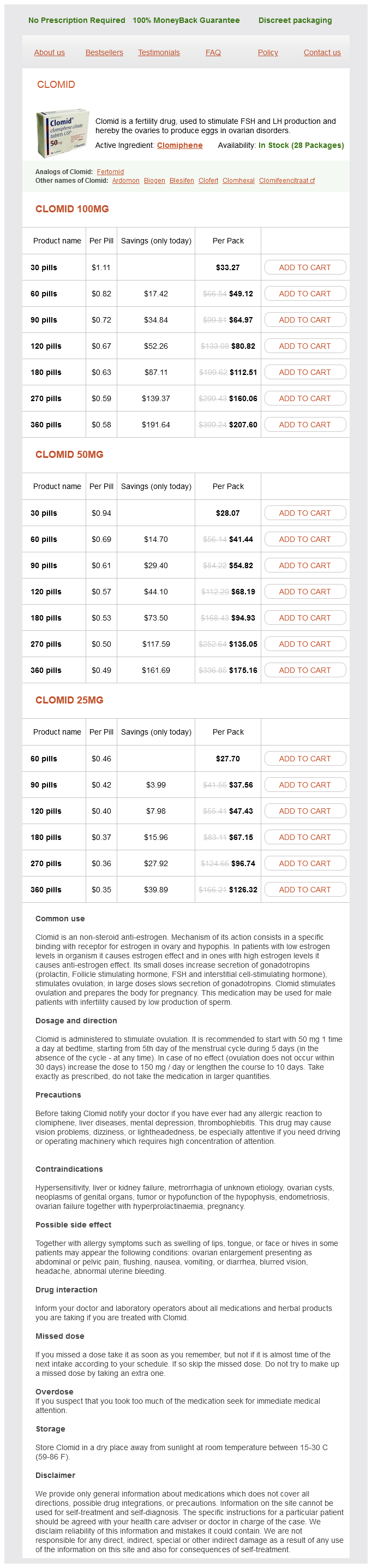
Clomid 100mg
- 30 pills - $33.27
- 60 pills - $49.12
- 90 pills - $64.97
- 120 pills - $80.82
- 180 pills - $112.51
- 270 pills - $160.06
- 360 pills - $207.60
Clomid 50mg
- 30 pills - $28.07
- 60 pills - $41.44
- 90 pills - $54.82
- 120 pills - $68.19
- 180 pills - $94.93
- 270 pills - $135.05
- 360 pills - $175.16
Clomid 25mg
- 60 pills - $27.70
- 90 pills - $37.56
- 120 pills - $47.43
- 180 pills - $67.15
- 270 pills - $96.74
- 360 pills - $126.32
Ardomon dosages: 100 mg, 50 mg, 25 mg
Ardomon packs: 30 pills, 60 pills, 90 pills, 120 pills, 180 pills, 270 pills, 360 pills
Only $0,37 per item
In stock: 821
Description
Very little vancomycin is removed from the physique by hemo dialysis (Lindholm and Murray pregnancy low blood pressure 25 mg ardomon purchase with amex, 1966; Eykyn et al breast cancer month 25 mg ardomon discount visa. In 29 anephric patients managed by hemodialysis at 3day inter vals womens health eugene oregon ardomon 25 mg low price, a single 1 g i menstruation heart palpitations ardomon 50 mg cheap mastercard. A serum degree was then measured 5�7 days later, and the vancomycin dose was repeated when the level fell beneath 5�10 g/ml. This technique usually leads to beneath dosing, as illustrated in more recent research. No affected person achieved a van comycin focus of 10 g/ml on research day eight (mean serum focus, 5. Six patients (83%) who obtained vancomycin predialysis had undetectable vancomy cin levels (< three. Patients who acquired vancomycin postdialysis maintained a imply serum concentration of 6. Levels had been checked urgently at the start of the following dialysis session to information additional dosing, and the levels have been calcu lated according to five trough stage classes (maximum administration rate 1 g/hour) (Jeremiah et al. Peritoneal dialysis additionally ends in minimal clearance of vancomycin (Moellering, 1984). In distinction to peritoneal dialysis and hemodialysis, some vancomycin is cleared by sufferers present process hemofiltra tion (Matzke et al. However, due to affected person topatient variability ensuing from components similar to blood circulate charges by way of the filtration equipment, monitoring of serum concentrations is necessary to guide dosing. The routine included a loading dose of 35 mg/kg given over a 4hour interval adopted by a daily dose of 14 mg/kg by steady infusion. Vancomycin concentrations were mea sured on the end of the loading dose (T1), 12 hours after the onset of remedy (T2), and 24 hours after the onset of remedy (T3). Drug concentrations at T2 and T3 were thought-about enough in the event that they were 20�30 g/ml. Vancomycin concentrations have been ade quate in 22/32 patients (69%) at T2 and in 20/32 patients (63%) at T3. This new vancomycin regimen allowed the speedy achievement of target drug concentrations within the majority of sufferers. Current dosing regimens achieved target concentrations for vancomycin (60%) against prone pathogens. Higher dosing vancomycin regi mens may be required in critically ill patients receiving renal replacement therapy, in the presence of excessive effluent circulate charges and/or the presence of poorly vulnerable pathogens (Jamal et al. Dosage adjustment might be not essential in sufferers with liver impairment, however monitoring of serum levels can be prudent. In eight out of 18 patients, a lot larger dosages have been required despite no main distinction in attained vancomycin steadystate trough focus or estimated CrCl. In four patients, the with drawal of cotreatment with hemodynamically lively medicine was adopted by a sudden substantial increase in the vanco mycin Cmin steady state, despite no major change in body weight or estimated CrCl being noticed. The authors high lighted the danger of potential subtherapeutic serum vancomy cin concentrations when these medicine are coadministered and the necessity for therapeutic drug monitoring of vancomycin in 4. A loading dose of 25�30 mg/kg has been proposed as an appropriate technique to avoid subtherapeutic vancomycin levels within the preliminary levels of therapy, specifically in critically sick sufferers (Wang et al. The imply trough plasma con centrations have been higher in the postintervention group (9. After 12 hours, the proportion of patients achieving a trough stage of 15 g/ml was greater within the group with loading dose (34% vs. In a prospective research of septic sufferers, a new dosing reg imen of vancomycin given by continuous infusion was vali dated. It consisted of a loading dose of 35 mg/kg body weight given as a 4hour infusion followed by a day by day steady infusion dose adapted to CrCl, as estimated by the Cockcroft Gault formula. Vancomycin concentrations had been measured on the end of the loading dose (T1), at 12 hours (T2), 24 hours (T3), and then the day after (T4) the beginning of therapy. Van comycin concentrations of 20�30 g/ml at T2, T3, and T4 had been thought-about adequate. Vancomycin concentra tions have been forty four, 25, 22, and 26 g/ml at T1, T2, T3, and T4, respectively. Concentrations have been enough in 56% (60/107) of sufferers at T2, in 54% (57/105) of patients at T3, and in 73% (41/56) of sufferers at T4. This vancomycin regimen per mitted fast serum focus target attainment in most sufferers. Concentrations were inadequate in solely 16% of patients at 12 hours of remedy (Cristallini et al. Dosing based on absolutely the physique weight, not the best body weight, was suggested to calculate preliminary vancomycin doses in these sufferers (Moellering, 1984). The efficiency of an obesespecific, biphasic, divided load vancomycin protocol for attaining target trough con centrations within 12 to 24 hours of dosing initiation, and during maintenance dosing, in obese sufferers was evaluated by way of a prospective medical document review in fifty four consec utive obese sufferers weighing as a lot as 245. Vancomycin serum concentrations had been drawn before the third and fifth doses after initiation. Steadystate concentrations were drawn after the third dose as quickly as upkeep dosing was achieved and periodically thereafter. Within 12 hours after dosing ini tiation, forty eight (89%) research sufferers exhibited trough concentra tions of 10�20 g/ml (mean 14. Thirtyone individuals had sec ond trough concentrations drawn inside 24 hours of dosing initiation, with imply concentrations of 15. Trough concentrations of 10�20 g/ml were achieved for 89% of obese sufferers inside 12 hours of preliminary dosing and for 97% of obese sufferers inside 24 hours of initial dosing whereas stopping doses given during supra therapeutic trough ranges. In addition, 97% of troughs mea sured through the steady state have been within the goal vary (Denetclaw et al. Patients with steadystate trough concentrations (measured 2 hours earlier than the following vancomy cin dose) and no proof of acute kidney harm earlier than van comycin initiation have been included. Logistic regression models have been used to measure the effect of assorted vancomycin dos ing regimens on the attainment of optimum goal trough concentrations (15�20 g/ml). In each group, approximately 20% of 802 Vancomycin patients achieved optimum goal trough concentrations. The authors concluded that extremely obese patients could require a lower weight based day by day dose than overweight sufferers to reach goal vanco mycin trough concentrations (Morrill et al. Bioavailability After oral administration, only very low serum concentra tions are obtained, except within the presence of renal illness plus bowel inflammation. Fecal ranges of 85�540 g/ml liquid stool were current in two infants given 15�20 mg/kg per day of oral vancomycin, however whose serum levels had been solely zero. However, some systemic absorption can happen, particularly in sufferers with renal failure in whom vancomycin elimination is decreased. Bergeron and Boucher (1994) described a leuke mic infant with regular renal perform who was treated with oral vancomycin 1 mg/kg 4 occasions every day. Absorption most likely occurred because of the combined results of anti bioticassociated colitis and alterations in mucosal integrity secondary to neutropenia and chemotherapy. In sufferers with normal CrCl, vancomycin has a distribution section of roughly 30�60 minutes and an elimination halflife of 6�12 hours. Peak serum levels with a dose of 1 g each 12 hours are usu ally 25�40 g/ml, and trough levels are 5�10 g/ml. Most of the variation might be accounted for by variations in weight of the sub jects. There is more variation within the elimination halflife, which ranges from three to 13 hours, the imply being approxi mately 6 hours (Rotschafer et al. Continuous infu sion of 30 mg/kg over 24 hours in thirteen sufferers resulted in a plateau level of 24 � 6 g/ml (Wysocki et al. The most com mon dosing regimen in adult and pediatric patients was 5�20 mg/kg/dose each 6 to eight hours. Higher total daily doses (40� 70 mg/kg/day) and elevated dosing frequency (every 6�12 hours in adults) could additionally be necessary to obtain current target trough concentrations (Carter et al. Because serum vancomycin levels may fall precipitously after the initiation of cardiopulmonary bypass, a preoperative dose of no much less than 15 mg/kg is mostly required to preserve sufficient serum ranges (Moellering, 1984).
Surinam Quassia (Quassia). Ardomon.
- Use on the scalp for head lice.
- How does Quassia work?
- Are there safety concerns?
- What other names is Quassia known by?
- Are there any interactions with medications?
- What is Quassia?
- Dosing considerations for Quassia.
Source: http://www.rxlist.com/script/main/art.asp?articlekey=96313
Soft tissue and bone penetration talents of daptomycin in diabetic sufferers with bacterial foot infections breast cancer hope 100 mg ardomon purchase. Evaluation of daptomycin menopause zinc purchase ardomon 25 mg fast delivery, telavancin womens health center 90042 effective ardomon 100 mg, teicoplanin breast cancer discussion boards discount ardomon 25 mg overnight delivery, and vancomycin activity in the presence of albumin or serum. Short-course gentamicin in combination with daptomycin or vancomycin against Staphylococcus aureus in an in vitro pharmacodynamic mannequin with simulated endocardial vegetations. Community- and well being care-associated methicillin-resistant Staphylococcus aureus: a comparability of molecular epidemiology and antimicrobial activities of assorted brokers. In vitro actions of daptomycin, vancomycin, and penicillin against Clostridium difficile, C. Daptomycin antibiotic lock remedy in a rat mannequin of staphylococcal central venous catheter biofilm infections. Daptomycin plus trimethoprim/ sulfamethoxazole combination therapy in post-neurosurgical meningitis brought on by linezolid-resistant Staphylococcus epidermidis. Daptomycin pharmacokinetics in critically ill sufferers receiving continuous venovenous hemodialysis. Efficacy of daptomycin in the therapy of experimental endocarditis as a result of prone and multidrug-resistant enterococci. Daptomycin failure in a neutropenic leukemia affected person with Staphylococcus aureus meningitis. The safety and efficacy of daptomycin versus different antibiotics for skin and soft-tissue infections: a meta-analysis of randomised controlled trials. Interaction of daptomycin with two recombinant thromboplastin reagents leads to falsely extended patient prothrombin time/international normalized ratio outcomes. Multiple-dose pharmacokinetics of daptomycin throughout steady venovenous haemodiafiltration. Evaluation of ceftaroline, vancomycin, daptomycin, or ceftaroline plus daptomycin in opposition to daptomycin-nonsusceptible methicillin-resistant Staphylococcus aureus in an in vitro pharmacokinetic/pharmacodynamic model of simulated endocardial vegetations. The efficacy of daptomycin versus vancomycin for methicillin-resistant Staphylococcus aureus bloodstream infection in patients with impaired renal operate. Systematic evaluation and meta-analysis of linezolid and daptomycin for therapy of vancomycin-resistant enterococcal bloodstream infections. Single-dose pharmacokinetics and antibacterial activity of daptomycin, a new lipo-peptide antibiotic, in wholesome volunteers. In vivo activity of daptomycin/colistin mixture therapy in a Galleria mellonella model of Acinetobacter baumannii infection. Daptomycin susceptibility of 833 strains of Gram-positive cocci from a university hospital in Japan (2009�2011). This lipophilic side chain in oritavancin permits stronger anchoring of the compound to the cell membrane through hydrophobic interactions, thus increasing its half-life (Guskey and Tsuji, 2010) and enhancing its spectrum of exercise in addition to the pace of bactericidal activity (Zhanel et al. The structural differences between oritavancin and vancomycin (the addition of a 4-epi-vancosamine monosaccharide and a 4-chlorobiphenylmethyl substituent on the disaccharide sugar) are indicated by circles. Mechanistically, oritavancin exerts its motion by interfering with bacterial cell wall synthesis and altering the cell membrane. Oritavancin inhibits transglycosylation by binding to the d-alanyl-d-alanine terminus of the peptidoglycan chain, like vancomycin. It also binds to depsipeptides, together with d-alanyl-d-lactate, in addition to inhibiting transpeptidation by binding to a secondary web site, thus retaining exercise towards vancomycin-resistant organisms (Patti et al. The addition of a hydrophobic 4-chlorobiphenylmethyl facet chain additionally causes concentration-dependent membrane depolarization and elevated permeability in various resistant phenotypes of S. However, due to its incapability to cross the outer membrane, oritavancin possesses no exercise against Gram-negative bacteria (Ward et al. In vitro activity of oritavancin against Gram-positive cardio and anaerobic bacteria. Against streptococci, oritavancin was less potent than penicillin however more potent than vancomycin (Mendes et al. Against Gram-positive anaerobes besides Clostridium difficile, oritavancin exhibited efficiency just like vancomycin but larger than metronidazole (Citron et al. The ensuing peptidoglycan precursors terminating in d-alanyl-d-lactate or d-alanyl-d-serine as a substitute of d-alanyl-dalanine in the end prevent the antibiotics from binding and exerting their antibacterial actions. Although there are seven operons or gene clusters that have been described (vanA, vanB, vanC, vanD, vanE, vanG, and vanL) (Henson et al. VanA enterococci are proof against each vancomycin and teicoplanin, whereas VanB organisms retain susceptibility to teicoplanin (Gold, 2001). On the opposite hand, each dalbavancin and telavancin are resistant to vanA-producing strains whereas retaining exercise against vanB-producing isolates (Butler et al. The vanC gene clusters mediate the pathway, producing peptidoglycan precursors with d-alanyl-d-serine termini that result in poor vancomycin binding and the intrinsic vancomycin resistance of E. Resistance to oritavancin was observed in serial passage research in opposition to the isolates of S. The first mechanism of motion, as for vancomycin, is thru the inhibition of the transglycosylation (polymerization) step of cell wall biosynthesis (Zhanel et al. During the synthesis course of, transport of the disaccharide-pentapeptide units across the cell membrane happens in the type of a fancy with a lipid carrier. Vancomycin and other glycopeptides bind to the d-alanyl-d-alanine terminus of the developing peptidoglycan chain, thus sterically hindering transglycosylation. Emerging resistance and cross-resistance Resistance to glycopeptides has been well documented in Enterococcus spp. Via the acquisition and expression of operons, the terminal d-alanine in peptidoglycan precursors is substituted with a terminal 4. Each dimer then has the flexibility to work together with two developing peptidoglycan precursors as an alternative of the only one afforded by a lone molecule. This, in turn, creates an additional binding site to the cytoplasmic membrane (Allen and Nicas, 2003). Unlike vancomycin, oritavancin additionally inhibits transpeptidation by binding to a secondary web site (Kim et al. Therefore, oritavancin exerts antimicrobial exercise in opposition to vancomycin-resistant organisms with the termini d-alanyl-d-lactate by alternatively binding to the bridge. Depolarization of the membrane was focus dependent and also led to rapid antimicrobial exercise, not like vancomycin. This mechanism has also been postulated to explain the exercise of oritavancin in opposition to S. The high protein binding of oritavancin, intensive renal reabsorption, large tissue distribution, and slow clearance from main organs were alleged to be the contributing components for this slow elimination (Bhavnani et al. When the clearance of oritavancin from human blood was evaluated in an in vitro hemodialysis mannequin utilizing every of three types of low- and high-flux dialyzers and one kind of continuous renal replacement remedy dialyzer, the imply dialytic clearance of oritavancin was insignificant (Kumar et al. Adults the recommended dosage of oritavancin is 1200 mg as a single dose administered by 3-hour i. The pharmacokinetics in subjects with moderate hepatic impairment has been decided (Fetterly et al. In this analysis, oritavancin pharmacokinetics had been compared after an 800-mg dose given to topics with Child-Pugh class B hepatic impairment and to healthy topics. Pregnant and lactating moms Oritavancin is categorized as pregnancy category C and must be used throughout pregnancy provided that the potential therapy profit outweighs the potential risk to the fetus (Package Insert, 2014). Reproduction research in animals tested at a dose equivalent to a human dose of 300 mg. It can be unknown whether or not oritavancin is excreted in human milk, although radiolabeled oritavancin-14C was excreted in milk and absorbed by nursing pups after a single i. Results of a population pharmacokinetic examine counsel that dose modification may be necessary in sufferers weighing > a hundred and ten kg (Rubino et al. Oritavancin demonstrates a high diploma of protein binding (86�90%) independent of drug concentration (Rowe and 912 Oritavancin Brown, 2001). Biophysical strategies to study the binding of oritavancin, a lipoglycopeptide, to serum protein are confounded by nonspecific drug adsorption to labware surfaces. We assessed oritavancin binding to serum from mouse, rat, dog, and human by a microbiological growth-based technique underneath conditions that permit near-quantitative drug recovery. These estimates support the translation of oritavancin exposure from nonclinical studies to people.
Specifications/Details
Drug-related renal dysfunction developed in 5 (4%) of 114 tobramycin-treated patients whose renal function was monitored and in 1 (1%) of 116 netilmicin-treated patients menstruation 4 days early 25 mg ardomon cheap mastercard. Other authors have additionally found the prevalence of nephrotoxicity to be about the identical in netilmicin- and tobramycin-treated sufferers (Bernstein et al menstruation hut generic ardomon 50 mg with mastercard. In a trial during which oncedaily gentamicin was in contrast with once-daily netilmicin for the remedy of serious infections women's health clinic london ontario citi plaza order ardomon 100 mg mastercard, the prevalence of nephrotoxicity within the two teams was once more about the identical (Prins et al breast cancer team names effective ardomon 25 mg. Kahlmeter and Dahlager (1984) surveyed aminoglycoside nephrotoxicity in roughly 10,000 patients described in medical trials published between 1975 and 1982. Average frequencies of nephrotoxicity for gentamicin, tobramycin, amikacin, and netilmicin were 14%, 12. It seems that comparative nephrotoxicity ought to be relatively unimportant when an aminoglycoside is chosen for remedy in a medical scenario (Luft, 1984). Other unwanted effects Elevated serum glutamic-oxaloacetic transaminase values have been noted in some sufferers. An elevation of serum alkaline phosphatase occurred in 43% of sufferers handled by Panwalker et al. Netilmicin, much like different aminoglycosides, can also cause neuromuscular blockade (Paradelis, 1979). Animal research have advised that aminoglycosides could have a myocardial depressant effect, and that netilmicin is more potent in this regard than gentamicin or sisomicin (Descotes and Evreux, 1981). However, the identical issues for gentamicin monotherapy in aside from urinary tract infections also apply to netilmicin (Vidal et al. Most clinicians choose to use the more acquainted and often less expensive gentamicin for the therapy of these infections, however some could favor netilmicin because of its decrease potential to trigger ototoxicity (Jackson, 1984). Netilmicin additionally appears as efficient as amikacin for the therapy of difficult urinary tract infections caused by Gram-negative bacilli vulnerable to both antibiotics (Maigaard et al. The drug is about as efficacious clinically as tobramycin when serious infections as a end result of organisms prone to each antibiotics are treated (Bernstein et al. Edelstein and Meyer (1978) used netilmicin to deal with 25 patients with critical Gram-negative bacillary infections, 9 of whom had gentamicin-resistant however netilmicin-susceptible pathogens. Previous therapy with gentamicin had been unsuccessful in 6, but 7 of the 9 sufferers subsequently responded to netilmicin. This drug could, once in a while, have a place in therapeutics instead, together with amikacin, for the remedy of these infections caused by gentamicin-resistant Gram-negative bacilli that remain prone to netilmicin. Netilmicin in combination with vancomycin has been used intraperitoneally to deal with peritonitis in patients on steady ambulatory peritoneal dialysis. Treatment of great systemic infections with netilmicin in combination with different antibiotics. Netilmicin within the neonate: pharmacokinetic evaluation and influence of parenteral nutrition. Results of therapy have normally been passable and much like those that could be expected from a similar gentamicin regimen (Klastersky et al. Prospective, randomized trial of netilmicin and amikacin, with emphasis on eighth-nerve toxicity. Three to eight weeks of therapy with netilmicin: toxicity in regular and diabetic sufferers. Influence of single or multiple doses of gentamicin and netilmicin on their cortical, medullary and papillary distribution. Efficacy of intermittent versus steady administration of netilmicin in a two-compartment in vitro model. Pharmacokinetics and dosage necessities of netilmicin in cystic fibrosis patients. Relationship between rat renal accumulation of gentamicin, tobramycin, and netilmicin and their nephrotoxicities. Gentamicin, netilmicin, dibekacin and amikacin nephrotoxicity and its relationship to tubular reabsorption in rabbits. Post-antibiotic effects in experimental infection fashions: relationship to in vitro phenomena and to remedy of infections in man. First-exposure adaptive resistance to aminoglycoside antibiotics in vivo with meaning for optimal medical use. In vitro research with netilmicin in contrast with amikacin, gentamicin, and tobramycin. The in vitro exercise of netilmicin in opposition to 357 scientific isolates of Enterobacteriaceae, Pseudomonas aeruginosa and Staphylococcus aureus. Comparative uptake of gentamicin, netilmicin, and amikacin within the guinea pig cochlea and vestibule. Effect of aminoglycosides on the disposition of thyroid hormones and thyroglobulin. In vitro activity of netilmicin in contrast with gentamicin, tobramycin, amikacin, and kanamycin. Once every day administration of netilmicin with thrice day by day, both in combination with metronidazole, in gangrenous and perforated appendicitis. Characterization of genes encoding aminoglycoside-modifying enzymes amongst methicillin-resistant Staphylococcus aureus isolates from two hospitals in Tehran, Iran. Prospective managed analysis of auditory operate in neonates given netilmicin or amikacin. Prospective randomized double-blind comparison of nephrotoxicity and auditory toxicity of tobramycin and netilmicin. A comparison of netilmicin and tobramycin remedy in sufferers with renal impairment. Ionic binding, adaptive resistance and post-antibiotic impact of netilmicin and ciprofloxacin. Changes in bacterial isolates from burn wounds and their antibiograms: a 20-year examine (1986�2005). The comparative exercise of aminocyclitol against 773 aerobic Gram-negative rods and staphylococci isolated from hospitalized patients. Comparative in vitro research with netilmicin, amikacin, gentamicin, sisomicin and tobramycin. Effect of concomitant administration of piperacillin on the deposition of netilmicin and tobramycin in patients with end-stage renal illness. Antimicrobial susceptibilities of Yersinia enterocolitica biotype four, serotype O:three. Serum and sputum concentrations of netilmicin together with acylureidopenicillin and cephalosporins in clinical remedy of pulmonary exacerbations in cystic fibrosis. A multicentric examine of netilmicin once day by day versus thrice day by day in patients with appendicitis and other intra-abdominal infections. Pharmacokinetics of netilmicin within the presence of normal or impaired renal perform. Postantibiotic impact of aminoglycosides on gram-negative micro organism evaluated by a model new technique. Penetration of netilmicin into heart valves, subcutaneous and muscular tissue of patients present process heart surgery. Aminoglycoside toxicity-a evaluate of medical research revealed between 1975 and 1982. Comparison of sisomicin and gentamicin in bacteriuric patients with underlying illnesses of the urinary tract. Clinical and bacteriological evaluation of netilmicin in Gram-negative infections. Netilmicin: in-vitro activity compared with that of other aminoglycosides against Serratia marcescens. Randomised, controlled trial of the comparative efficacy, auditory toxicity, and nephrotoxicity of tobramycin and netilmicin Lancet 1: 1123. Comparative pharmacokinetics of lividomycin, amikacin and sisomicin in normal topics and in uraemic patients. Pharmacokinetics of netilmicin in sufferers with renal impairment and in patients on dialysis.
Additional information:
Syndromes
- Vomiting
- Chills
- Have family members or other caregivers learn how to watch out for skin sores
- Flat feet
- Complete blood count (CBC)
- Antifreeze
- Biological -- made of human or animal tissue. These valves last 12 - 15 years, but you may not need to take blood thinners for life.
- Cardiologists, doctors who have received extra training in the treatment of heart disorders
Related Products
Usage: p.o.
Tags: 100 mg ardomon buy free shipping, 50 mg ardomon order with mastercard, ardomon 100 mg discount with visa, purchase ardomon 100 mg with mastercard, ardomon 50 mg buy overnight delivery, ardomon 25 mg order on-line, purchase ardomon 50 mg with mastercard, cheap 25 mg ardomon amex, ardomon 50 mg buy, 100 mg ardomon buy free shipping, ardomon 50 mg generic online, order ardomon 25 mg free shipping, 25 mg ardomon order with mastercard, 25 mg ardomon discount with visa, ardomon 100 mg discount visa, ardomon 25 mg purchase mastercard
10 of 10
Votes: 99 votes
Total customer reviews: 99
Customer Reviews
Irhabar, 65 years: An outbreak of colonization with linezolid-resistant Staphylococcus epidermidis in an intensive remedy unit.
Aschnu, 21 years: Azithromycin (500 mg on day 1, adopted by 250 mg day by day for days 2�5) was clinically (89% vs.
Bozep, 24 years: The general sustained clinical success rate in sufferers followed for as a lot as 2 years was 86.
Dargoth, 62 years: The elimination of tritiated doxycycline in normal topics and in patients with severely impaired renal function.
Ugrasal, 48 years: In terms of symptomatic remedy, metroni dazole, bacitracin, and fusidic acid appeared to be equally efficient as vancomycin.
Sivert, 63 years: Mycobacterial infections the newer macrolides, similar to clarithromycin and azithromycin, are actually preferred for the remedy of nontuberculous mycobacterial infections (see Chapter sixty one, Clarithromycin).